
ในบทความนี้
- Why internal change isn’t always visible to others
- How automatic reactions shape our daily experience
- The difference between reacting and consciously responding
- Using everyday situations as practice for awareness
- How choosing differently can break long-standing patterns
Do you feel caught in a rut? Do you believe things never change? Do you think people, including yourself, will never change?
If you answered yes to any of these questions, I have some good news for you. You're wrong. Things always change. People change. We all change. You change.
Change is constant, but growth only happens when we consciously choose how we respond.
Change Is Happening, Even When You Can’t See It
Of course, on the physical level it’s obvious that we all change. Children get taller. People get older, gain weight, lose weight, get wrinkles, gray hair. That’s obvious. However, what’s less obvious is internal change. And even when we know—or hope—we are changing, the people around us may not be aware of it.
Why? The first reason is that they have an image of us registered in their brain, and even when we change they may not have updated that image. They’re still focused on the old you, whatever that was. Maybe they still see you as the person who was rude or uncaring or always rushing around or weak, or something else entirely.

The other reason people may not see that we have changed is because we are not demonstrating it in our words and interactions. While we may have changed internally, we might not yet be expressing it on the outside. It may still be living within us as a wish, a dream, or a potential, but not as a reality.
We may feel the change inside—that we are more patient, more loving, more accepting of others—but on the outside we may still be exhibiting the same old behavior. Internal change becomes real only when it shows up on the outside, in our behavior.
Responding Differently Starts on the Inside
So how do we get to be this new person we are becoming? By responding differently.
Our response to life, to others’ words and actions, and even to our own desires is what becomes manifested. Our response is what people see. Not our intention, not our belief, not our wish, but our actions.
Yet our response does not start with an action. It starts with an attitude. It starts with a thought. It starts with an energy that then becomes translated into external action. It all starts inside of us and then gets projected outside and reflected to and by the others around us.
Responding differently requires not only intention, but also awareness. We may intend to be more patient, and yet if we are not aware of our thoughts, aware of our behavior, aware of our choices, we may still be repeating the same old behavior and attitudes of the past. Or another version of the past.
To respond differently, we have to be present in the moment, not living in the past, not assuming that nothing has changed with the other person or situation. Everything is constantly changing, whether we see it or not. And oftentimes that change is initiated by our own change, our own different way of seeing, being, and responding to the people and events around us.
Rather than considering this as theory, let’s look at a place where most of us face this choice almost every day.
Changing While On the Road
A good example of this, and a good place to practice, is impatience with other drivers on the road.
You know what I mean, being impatient with the person who’s driving too fast or too slow, not using their signal lights, cutting you off, following too close, or whatever your particular triggers may be. We all have at least one and possibly even several. And because this is such a common occurrence, it’s a great place to practice.
For example, you’re driving down the road and some idiot... Okay, there’s the first place we can make a change. Let’s not judge him as an idiot. He’s just a person. Next.
So we continue. You’re driving down the road and a person drives up behind you and recklessly passes you on a solid double line while somebody’s coming in the opposite direction. They quickly weave in and out, barely avoiding an accident, at least in your perception.
And here is where we get to choose differently.
We can do what we’ve probably been doing for a long time: internally, or perhaps out loud, call the person names, get upset, impatient, frustrated. We can work ourselves up into a frenzy of anger and judgment. Or, we can look at it from another perspective and respond differently.
Maybe the person is late for work and has been threatened with being fired if they ever were late again. Maybe he got a call that his mother is dying and he’s trying to get there while she’s still alive. Maybe he’s rushing his wife to the hospital because she’s in labor. I'm not saying that any of these situations would make the reckless driving appropriate, but they can help us understand what is causing that person to behave in that way.
But all these scenarios are in our imagination. We have no idea what is really going on with the other drivers.
The only thing that is not in our imagination is the attitude or energy that we choose to respond with. Rather than choosing impatience and anger and frustration, we can choose patience, compassion, and wish the other driver well. Rather than thinking he will cause an accident, or wishing he'll get a ticket for reckless driving, we can choose to think: I hope they're going to be safe.
And the difference between these choices is the difference between being in inner turmoil or residing in inner peace.
Your Choices May Not Even Be Your Own
A lot of our behaviors and attitudes were learned from others. We learned them from our role models, whether those role models were positive or not. There is such a thing as negative role models, and unfortunately many people grew up with them.
Many of us may have grown up in families where parents communicated their stress and fears through shouting and blaming, putting the other person down, or even physical abuse. We may have learned to try to control the people in our lives. And unfortunately, because we learned those behaviors so young, they may have become part of our mode of operation, our MO.
Or, rather than learning aggression, we may have learned to be submissive. Maybe our role models showed us to not rock the boat, to accept abuse, whether emotional, physical, or verbal, and not to push back.
Many of our reactions are inherited habits, not conscious choices. Whatever behavior was exhibited around us, chances are we absorbed that behavior as the way we think things are. Or we may have rebelled and adopted the opposite behavior. But either way, if our behavior today is not solely based on what is taking place now, we are caught in the rut of the past. We are simply mirroring and repeating old patterns and old reactions.
This is why it is so important to be present and aware in the present moment. To get out of the rut, we need to constantly be looking within at our reactions and at our choices, and making sure that we are not on autopilot. We want to make sure we are not repeating the mistakes of our elders and possibly of the generations that came before.
These energies and these reactions and these memories are embedded in our cells, and if we are not careful we can end up repeating these old scenarios. This is why so many people who swore they would never be like their parents find themselves treating their children the same way they were treated. Why? Because it’s a learned behavior, and because without awareness we can fall into automatic reactions.
In real estate they often use the expression location, location, location. Well, I think in creating a happier life for ourselves we might start with awareness, awareness, awareness.
First we have to see the problem or the situation clearly. Then we have to acknowledge it. And next, we have to be willing to say: I’ve been repeating a pattern. I’m in a rut.
Then we can reset our internal GPS. Just as we reprogram the GPS in our car to avoid highways or roads with congestion, construction, or accidents, so it is with our internal GPS. We can reprogram it to avoid the old beaten paths of automatically reacting with anger, judgment, or submission.
Turning Off Automatic Pilot
What you’ve learned from your role models throughout your childhood will tend to be your automatic response unless you choose differently. Once you start to become conscious in every interaction that you have a choice as to how you respond, you won’t end up repeating the same old same old.
If you find that you’re not happy now, that you’re not at peace with yourself and with the people around you, then if you want things to be different, something has to change. And that something is not the other person. That something is us, our attitude, our reactions, and our chosen responses.
So today I encourage you, before you respond in a known pattern, to pause for a brief moment and ask yourself if your usual reaction will bring you what you truly desire. If what you desire is love, peace, harmony, is the reaction you’re about to jump into going to lead to that, or is it going to lead to more conflict?
Just because someone is choosing to start an argument doesn’t mean you have to participate. You can refuse to play the conflict game. You can choose a new response. And sometimes that means walking away and sometimes it means simply shifting how you respond.
It takes two people to have an argument or a fight. So if you don’t choose to participate, the other person is left wearing their boxing gloves with nobody to fight.
Choosing a New Response
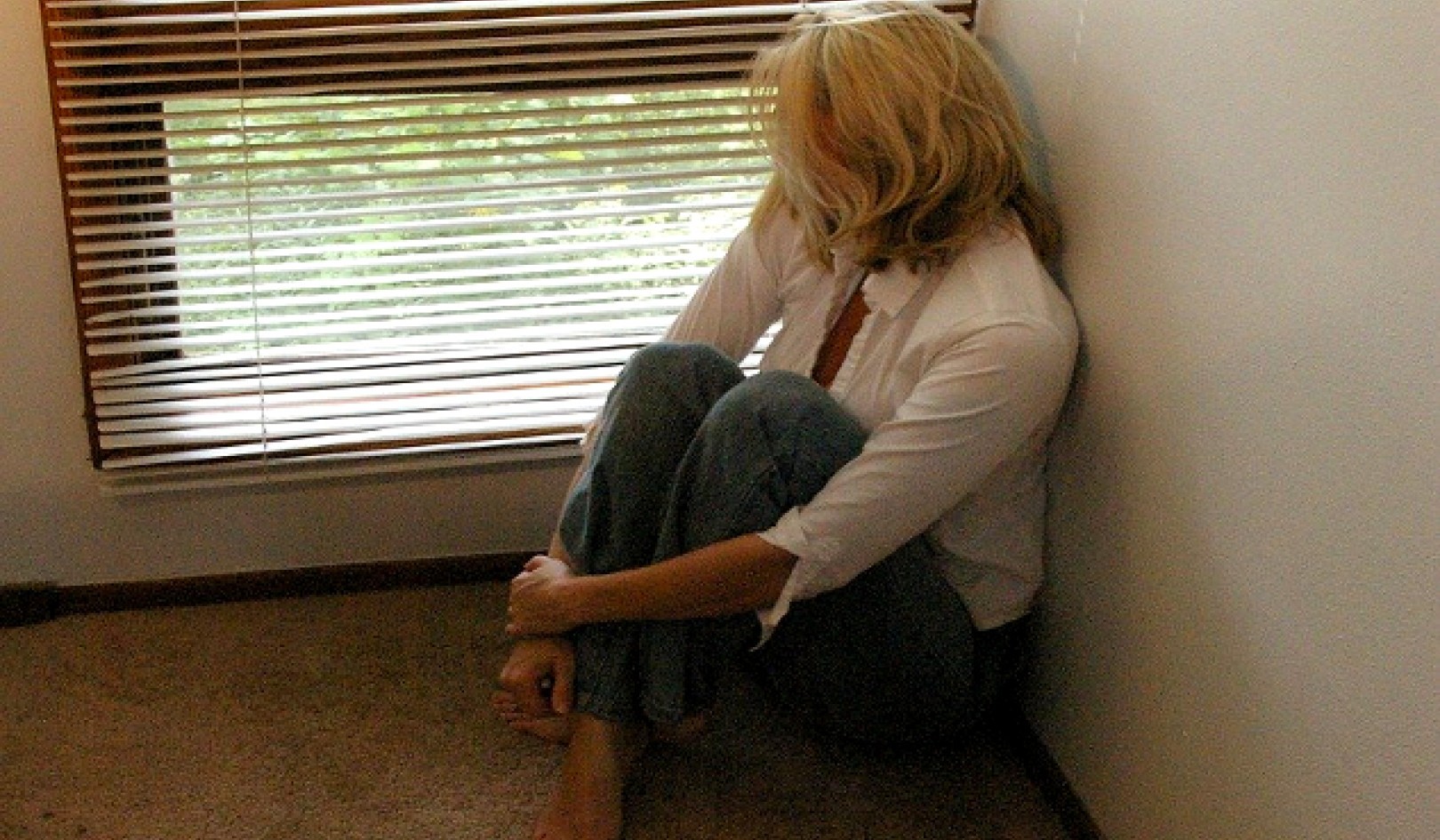
Don’t be hard on yourself if you fall back into your rut. Patterns are tenacious and require vigilance and persistence to break. The important thing to remember is that you can get out of the rut. You don’t have to stay there. Anytime you return to the old pattern, forgive yourself for not being perfect. Then, choose to step out of the rut and choose a new path, a new behavior, a new attitude.
Maybe you’re a person who has had a temper, who has tended to react angrily or judgmentally to people and situations. Maybe you’re known for jumping off the deep end when something is not to your liking, and not only expressing your discontent but berating people and putting them down and dumping all your anger and frustration on them.
You’re not stuck there. That’s not you. It’s simply an old behavior pattern.
Choose differently. That’s the way to create a new life, a new energy, and a new you.
We are not helpless. We are not victims of our emotions. E-motions are simply energy in motion. Meaning they are moving, and thus can move out and away. We can choose to hang on to it or we can choose to let it go.
If you would like to be happy, if you would like to be at peace within yourself, choose patience, acceptance, understanding. And choose to be kind and loving to yourself, no matter what. You are a work in progress, not a finished creation.
And you might say, well, all of that is easier said than done. Well yes, because everything is easier said than done. Yet the first step is to think it and to choose it, and to say it. Once those steps are taken, then you’re well on your way to getting it done.
First believe you can change. Believe you and your life can be different. And then be willing to let it be different. Be willing to choose differently and not stay stuck in the same old pattern, the one that brings no joy, no peace, no harmony.
The Director’s Seat
Start looking at the movie of your life at the moment it is taking place, not after the fact. Be aware that you are sitting in the director’s seat and get to guide your actions from behind the scenes. You get to give directions. For example: in this situation you will react with patience rather than impatience. In this other situation you will express compassion rather than judgment. In this next scene you will choose to be helpful rather than putting the other person down.
It all starts with us. And that is such a wonderful bit of empowering news. The power to change our life is in our own hands. Not in anyone else’s. Not in your parents, your mate, your boss, your government. You.
And of course everyone else is an actor in your life play, but you are the director and you are the star. You are the one that sets the tone for everything that goes on in your day-to-day life. Remember, just because someone wants to argue, you don’t have to participate.
กำหนดบรรยากาศสำหรับวันของคุณ
If you get up on the wrong side of the bed, your whole day tends to go downhill. And if you get up with a smile on your lips, with gratitude in your heart, the day goes smoothly. Why is that? Because you are setting the e-motion, and responding accordingly.
If you wake up in a bad mood, impatient, angry, then you have set the tone in which you will be responding to others and to situations. But, if you start your day with love and gratitude, that’s the tone you have selected.
It’s all so simple actually. It comes down to choosing differently.
So what are you going to choose today? It’s all up to you.
Choose according to the end result you desire. Peace? Love? Joy? They are all yours for the choosing.
เกี่ยวกับผู้เขียน
 Marie T. Russell เป็นผู้ก่อตั้ง นิตยสาร InnerSelf (ก่อตั้ง 1985) เธอยังผลิตและเป็นเจ้าภาพการจัดรายการวิทยุประจำสัปดาห์ในเซาท์ฟลอริดาอินเนอร์พาวเวอร์จาก 1992-1995 ซึ่งมุ่งเน้นที่หัวข้อต่าง ๆ เช่นความนับถือตนเองการเติบโตส่วนบุคคลและความเป็นอยู่ที่ดี บทความของเธอเน้นที่การเปลี่ยนแปลงและเชื่อมโยงกับแหล่งความสุขและความคิดสร้างสรรค์ภายในของเราเอง
ครีเอทีฟคอมมอนส์ 3.0: บทความนี้ได้รับอนุญาตภายใต้สัญญาอนุญาตครีเอทีฟคอมมอนส์แบบแสดงที่มาร่วมแบ่งปันแบบเดียวกัน 4.0 แอตทริบิวต์ผู้เขียน: Marie T. Russell, InnerSelf.com ลิงก์กลับไปที่บทความ: บทความนี้เดิมปรากฏบน InnerSelf.com
หนังสือแนะนำ:
The following books can help deepen the shift from insight into daily practice. They explore how awareness creates the space needed to move beyond automatic reactions and choose responses that support growth, clarity, and inner peace.
* Atlas of the Heart
โดย เบรเน่ บราวน์
Learning to recognize and name our emotions gives us the power to respond consciously rather than react automatically. In Atlas of the Heart, Brené Brown maps the emotional experiences that shape our behavior and relationships, helping readers build deeper self-awareness and emotional clarity. This book beautifully supports the article’s message that change begins when we become aware of what is happening inside us.
For more information, reviews, and ordering options:
https://www.amazon.com/dp/0399592555?tag=innerselfcom
* The First Rule of Mastery: Stop Worrying About What People Think of You
by Michael Gervais.
Many automatic reactions are driven by fear of judgment or external expectations. Performance psychologist Michael Gervais offers practical strategies for shifting from reactive patterns toward authentic, internally guided choices. Readers learn how to stay present and grounded, reinforcing the article’s theme of responding consciously rather than repeating inherited habits.
For more information, reviews, and ordering options:
https://www.amazon.com/dp/1647823242?tag=innerselfcom
* เสียงในหัว: เสียงที่อยู่ในหัวเรา เหตุใดจึงสำคัญ และวิธีควบคุมมัน
โดย อีธาน ครอสส์
Our inner dialogue often determines whether we react impulsively or respond with intention. Ethan Kross explains how to step back from mental loops and develop healthier ways of relating to our thoughts. With practical tools grounded in psychology, this book complements the article by showing how awareness transforms emotional reactions into thoughtful responses.
For more information, reviews, and ordering options:
https://www.amazon.com/dp/0525575243?tag=innerselfcom
ขอแจ้งเตือนสั้นๆ…
เมื่อคุณซื้อสินค้าบน Amazon โดยใช้ลิงก์ InnerSelf ของเรา…
คุณจ่ายในราคาเดิมที่ต่ำ ไม่มีค่าใช้จ่ายเพิ่มเติม
Amazon จ่ายค่าธรรมเนียมการแนะนำลูกค้าให้กับเรา
InnerSelf ยังคงให้บริการฟรี
สำหรับคุณและผู้อ่านทั่วโลก
ใช้ลิงก์นี้เมื่อคุณซื้อสินค้า:
https://www.amazon.com/?tag=innerselfcom
ขอบคุณสำหรับการสนับสนุน InnerSelf
สรุปบทความ:
Choosing to respond differently is the foundation of meaningful personal change. By becoming aware of automatic reactions and consciously shifting our responses, we break inherited patterns and create new emotional pathways. Awareness, patience, and intentional choice transform everyday situations into opportunities for growth, inner peace, and lasting behavioral change.
#PersonalGrowth #SelfAwareness #Mindfulness #EmotionalIntelligence #InnerPeace
#BehaviorChange #ConsciousLiving #SelfDevelopment #EmotionalWellbeing #InnerSelfcom